What’s new?
Stay in touch with our progress!
-
SENSOTERIC @ ISCAS 2026
It has been an incredibly exciting time for the SENSOTERIC project as we recently traveled to the splendid setting of Shanghai for the 2026 IEEE International Symposium on Circuits and Systems (ISCAS). Presenting our work on such a global stage was thrilling, but the real highlight was the chance to meet friends from so far…
-
Year 2 Meeting – a Diary
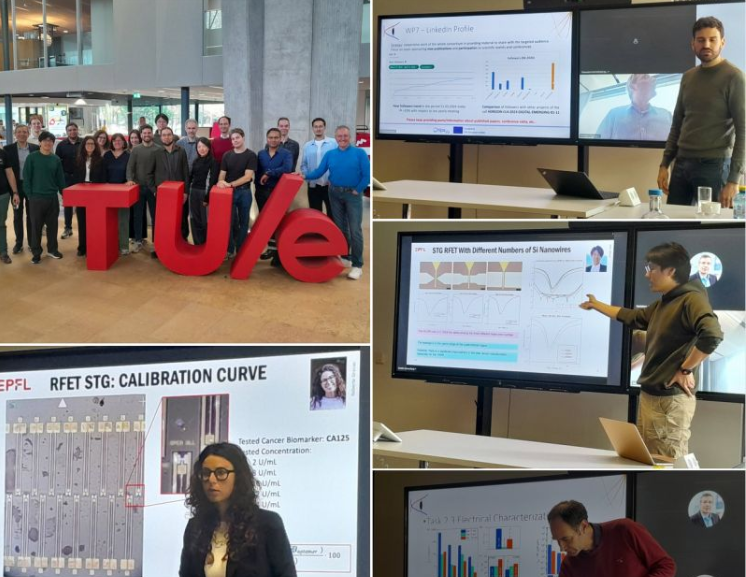
What a journey the last twelve months have been! Recently, the SENSOTERIC consortium gathered at TU/e (Eindhoven University of Technology) for our highly anticipated second yearly meeting. Hosted by Eugenio Cantatore, these two days were packed with incredible updates, scientific discoveries, and major technological advancements. Every partner took the stage to report on the progress…
-
Inspiring Tomorrow’s Talents at “Future Day”
A fundamental part of our vision here at the SENSOTERIC project is not only pushing the boundaries of technological research but also training and inspiring young talents. We strongly believe that science needs to step out of the labs to engage with the community, which is why outreach activities are so close to our hearts.…
-

First Review Meeting – A Diary
It feels incredible to all of us, but SENSOTERIC has been up for almost 2 years now. This means that on late September 2025 we were ready for meeting our Programme Officer (PO) and our Reviewers in order to assess the project results in the first reporting period (RP1). Such an important meeting, requires careful…
-
Let’s Celebrate our Team!
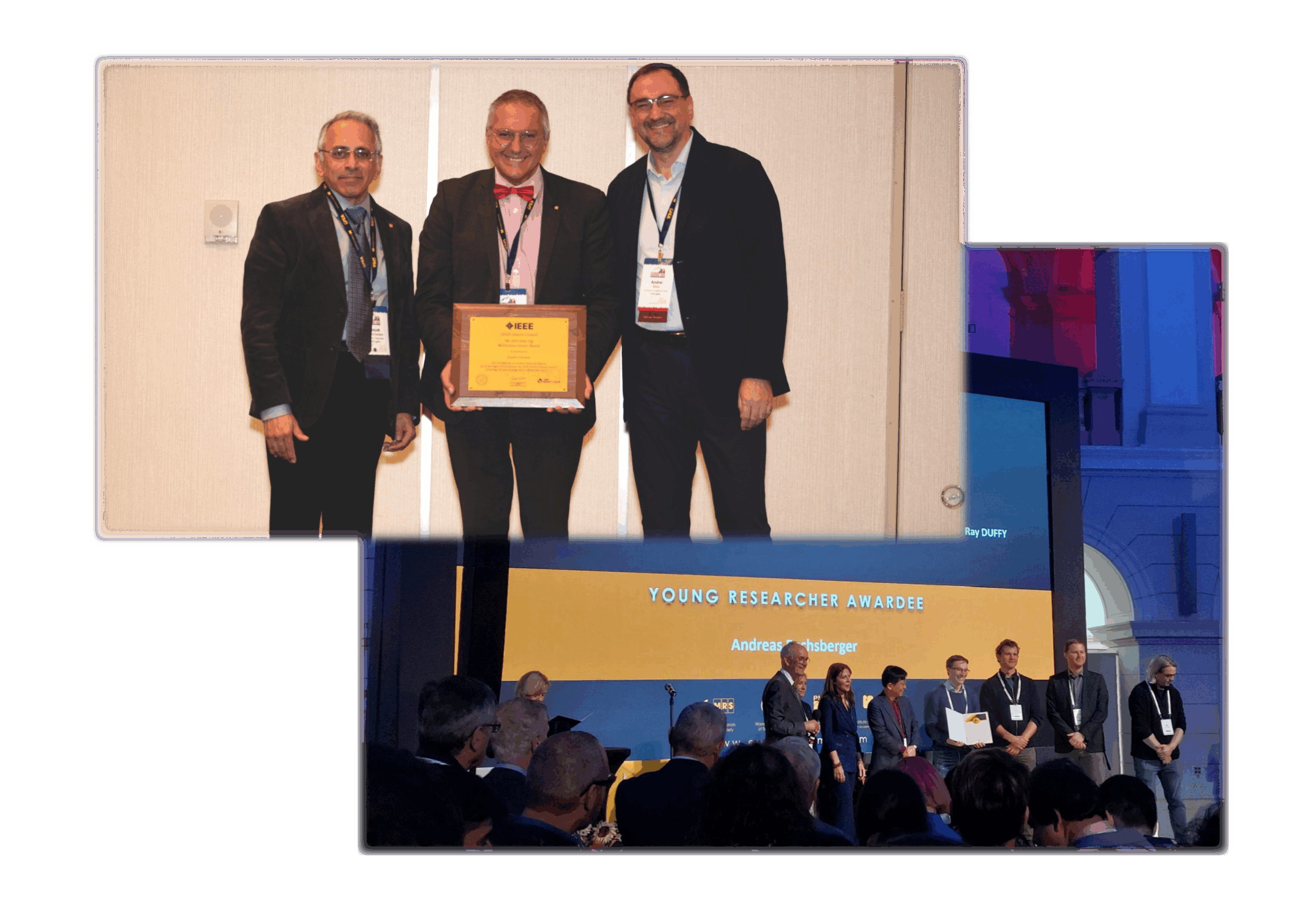
We are happy to report and to celebrate with you the great personal achievements of two members of our consortium. Sandro Carrara, PI in SENSOTERIC, was selected as the recipient of the prestigious 2025 “IEEE Sensors Council John Vig Meritorious Service Award” for his outstanding contributions as Editor-in-Chief of the IEEE Sensors Journal and for…
-
SENSOTERIC @ ESSERC 2025
It is with great excitement that we can share our participation, for the second year in a row, to the 2025 edition of the European Solid-State Electronics Research Conference (ESSERC). At the conference, held in Munich between the 8th and the 11th of September 2025, our team will present “On the Unusual HCI Degradation of…
-
DATE 2025 – A Diary
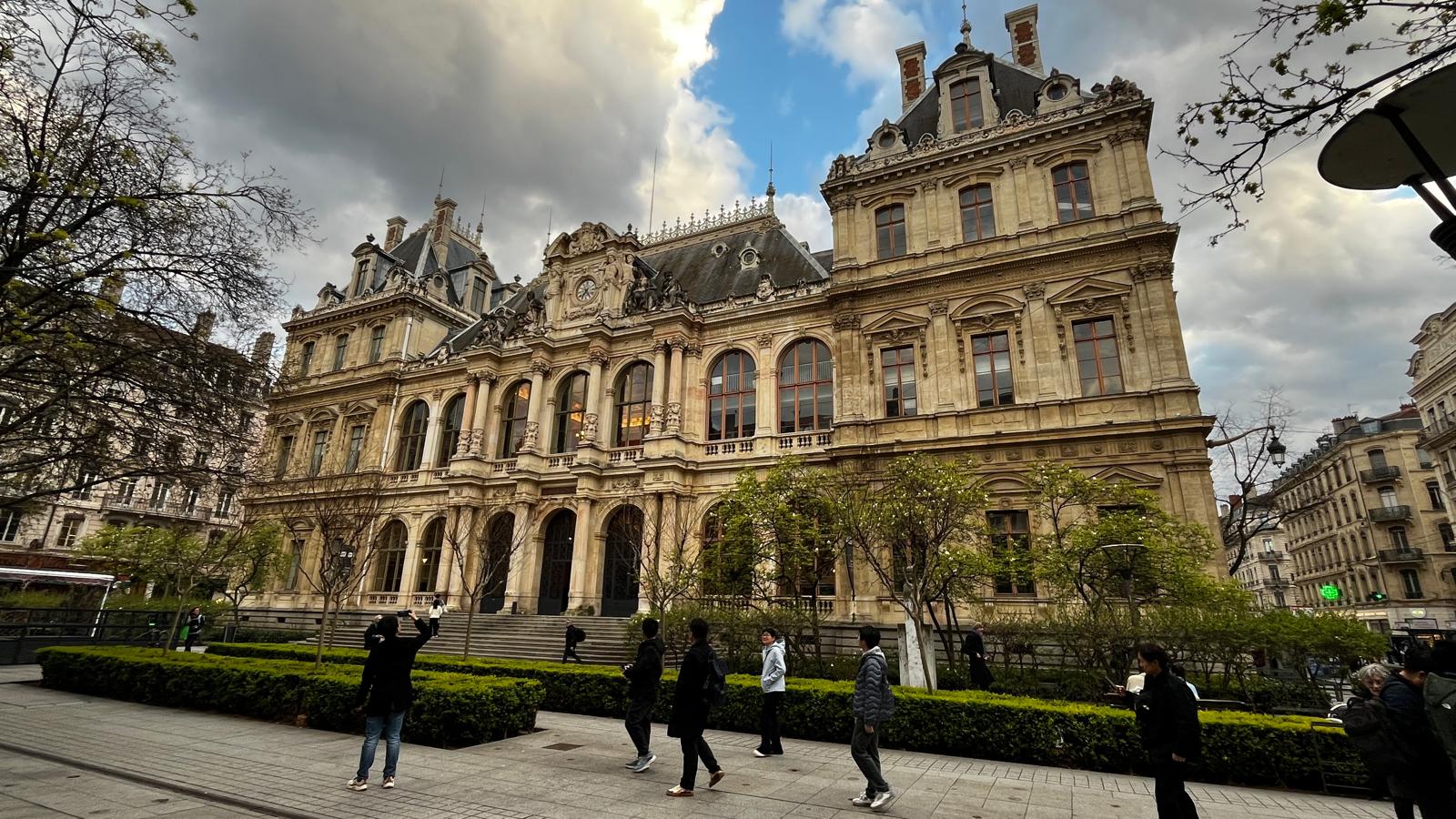
This year’s edition of Design, Automation and Test in Europe (DATE) Conference represented a real milestone for us at SENSOTERIC. In the beautiful location of Lyon, France, we indeed had the chance to participate to the Multi-Partner Project (MPP) Track where we presented the vision and initial stage of our project. Long-standing European conference, DATE…
-
Great Team – Great Achievements
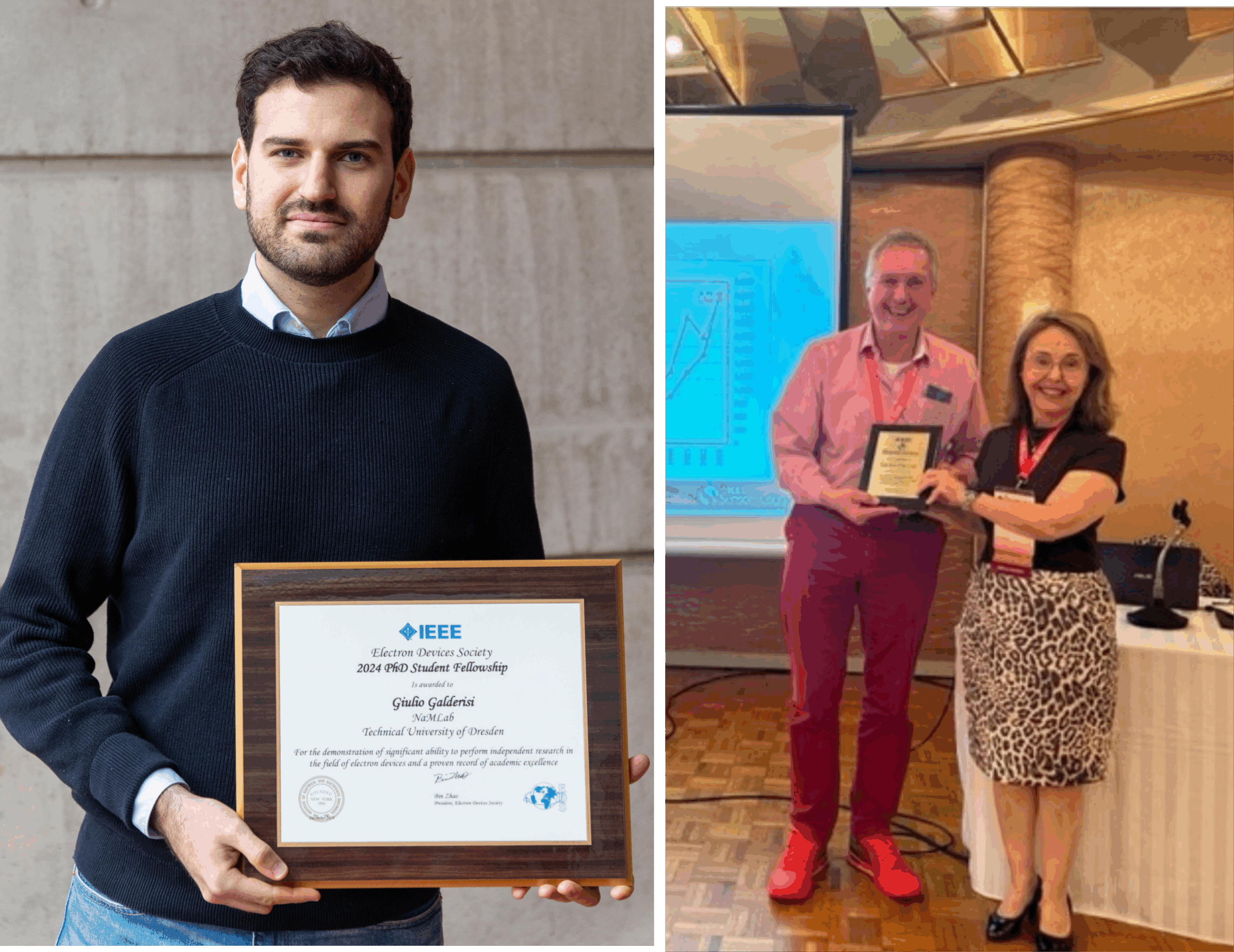
We have always been incredibly proud, that in SENSOTERIC we could put together an amazing team of scientists both experienced and at the beginning of their careers. For the first ones, SENSOTERIC was the perfect occasion to challenge their consolidated research with a disruptive goal and using new technologies. Unlike a car’s one, the engine…
-
Year 1 Meeting – A Diary
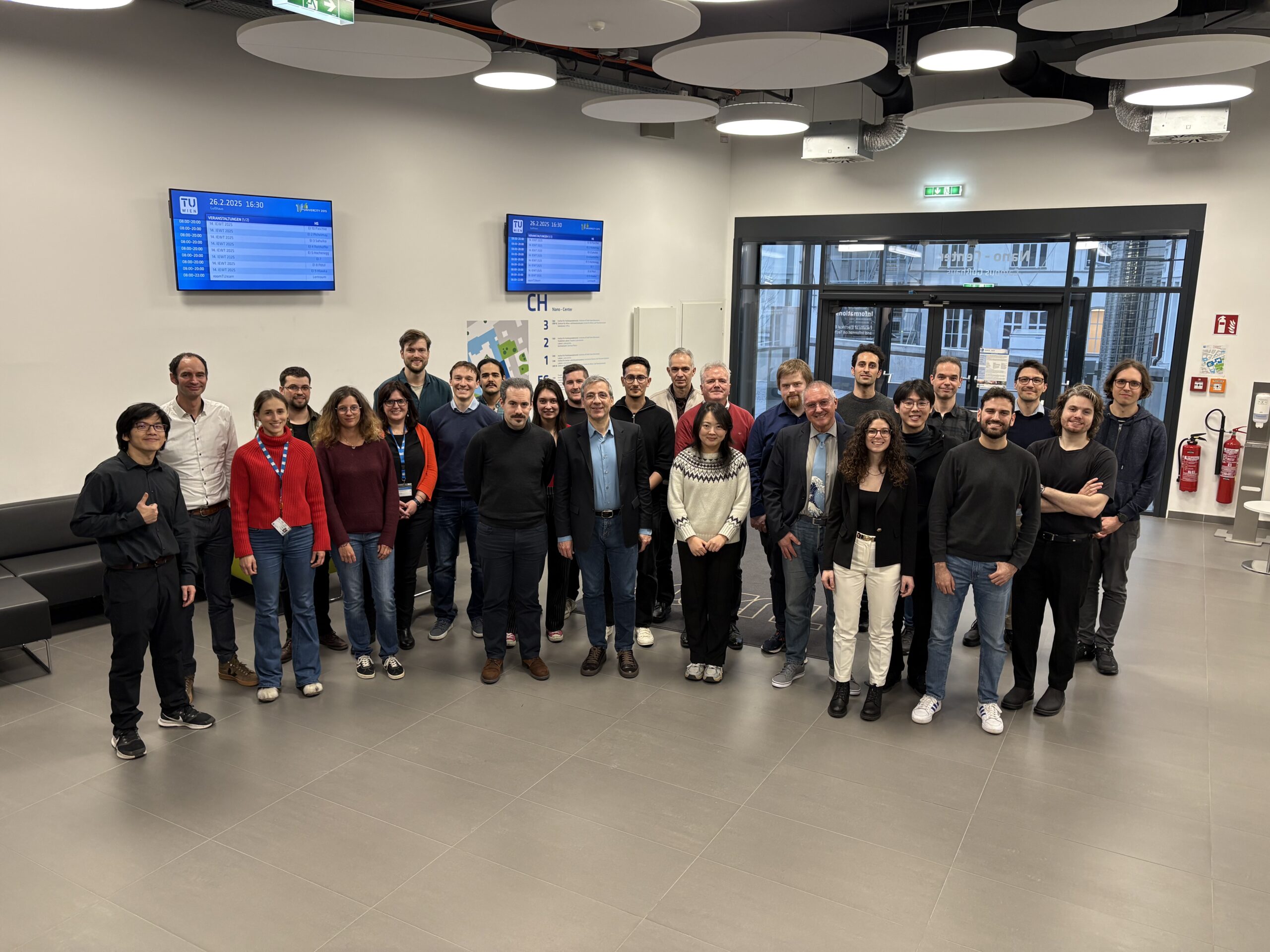
On February 26th and 27th 2025, all the project partners (NaMLab, TU Vienna, Global TCAD Solutions GmbH, TU Darmstadt, TU Eindhoven and EPFL) met up in Vienna for the yearly project meeting of SENSOTERIC. The two-day, event-packed meeting was hosted by the partners at TU Vienna in the brand-new Institute of Solid State Electronics led…
-

SENSOTERIC @ DATE25
In our quest for reaching out to the scientific community in all the research areas that our project intersects, we have today the privilege to announce that our project will be present at the 2025 Design, Automation and Test in Europe (DATE) Conference. In particular, our project coordinator Jens Trommer will present the vision and…
Discover our mission
Global challenges for today’s technology development call for more sustainable, nanoelectronics-enabled strategies for healthcare, mobility, and environment.

Smart cities and smart homes, autonomous vehicles, and industry 4.0 are driving the technology market away from a processing-information-centric past to a sensing-and-actuation-centric future. The technological needs for this transformation are complex, as sensing technologies are very diverse and not driven solely by scaling, performance and cost, as opposed to the case of CMOS electronics. From the view of Europe’s industrial landscape, smart sensors are key technologies in the important automotive and healthcare/medical market segments.
Our global objective is the development of a reconfigurable platform to accommodate both for a generic analog front-end (AFE) sensor interface able to adapt to the change in environmental conditions, thus reducing power consumption and improving the signal quality, as well as a dedicated reconfigurable sensor transducer (RST) element for the detection of cancer biomarkers. Reconfigurable Field Effect Transistors (RFETs) hold the promise to provide the much-needed flexibility for this AFE/RST concepts, and are integrable as add-on into classical scaled CMOS processes like the 22 nm FDSOI, fully European available platform offered by GlobalFoundries. These devices provide adjustable device characteristics at runtime, e.g. the dynamic switching from p-type to n-type behavior or a negative differential resistance (NDR) mode, allowing the alteration of circuit behavior after manufacturing. Circuit characteristics become fine-tunable at run-time when deploying RFETs into conventional CMOS architectures.
Project Partners








Browse our posts
Funded by the European Union